One of our favorite shows is Schitt’s Creek, and one of our favorite moments is the “Fold in the cheese.” scene.
Teachers experience David’s same emotions when they are told, “Differentiate.”, “Increase rigor.”, or “Work on engagement.” without examples of why or how. Like David, they’re left guessing what to do next, and frustration replaces trust. Similarly, think about Ross in Friends yelling “Pivot!” as Chandler and Rachel struggle to get the couch up the stairwell. The direction is repeated–and actually what they could be doing–but is not supporting any clear next steps.
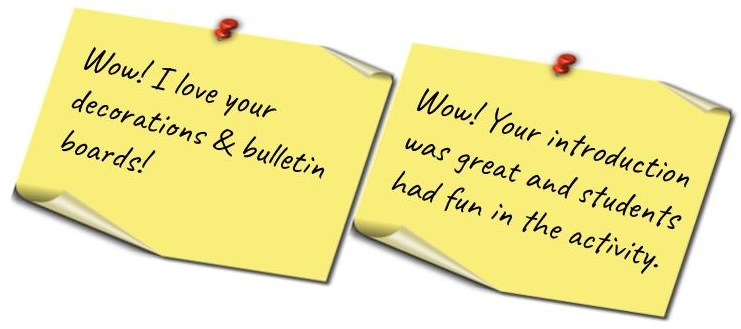
As instructional leaders, we must pause and ask ourselves not just when have we felt like David or Chandler (especially if your observer remained seated by the door for the entire visit) but also when have we been Moira or Ross?
- How many times have we provided general or broad feedback expecting the receiver understands specifically the impact they are having or is able to execute next steps?
- How often are we unsure of specifically how to help? or…
- How many times have we chosen to soften feedback because we fear how it will be received?
Lights. Camera. Action, you are in the “Fold in the Cheese” moment.
Trust Me, I Know What I am Talking About
On screen, David and Moira’s relationship survived the “Fold in the cheese” moment. But in schools, trust isn’t guaranteed — it has to be earned and protected. As Stephen Covey reminds us, “Trust is the function of two things: character and competence.” Feedback after classroom visits sits right at that intersection.
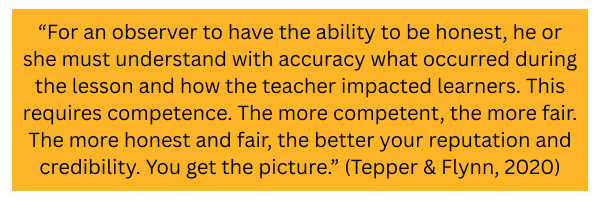
As observers, our credibility hinges on both. When we shy away from honesty out of fear, or when we lack the skill to analyze evidence accurately, we erode trust in minutes. Trust is built when we demonstrate competence in collecting evidence and the character to use it with fairness and honesty.
Stop Guessing. Start Collecting
In a positive and productive culture where everyone is a learner, teachers need to see their practice through the lens of accurate evidence, not tentative inferences or assumptions. (Tepper & Flynn, Standard of Observation & Feedback 1.E)
We lose credibility when we:
- can’t accurately determine effectiveness or make claims about practice without bias.
- overlook whether and how students were actually learning — and miss the chance to help teachers see strengths through a student-impact lens.
- fail to identify or co-create the highest-leverage next steps or frame reflective questions that push thinking and practice forward.
Specificity matters. Model formative assessment for them. Between our two books, we’ve outlined 50 strategies for feedback, with more than half devoted to evidence collection so observers can answer the essential questions: Are students engaged and learning? How do you know?

“Seriously, How?...You Fold it In!”
We saw a huge swing in leader prep and evaluation training that resulted in the dreaded timestamped script, proof we could act like court reporters but not necessarily capture learning or student thinking.
| 10:36 – 100% students with eyes on teacher 10:42 – Students chorally respond “No” in response to teacher question 10:43 – 100% of students with eyes on teacher 10:45 – 100% of students participate in turn-and-talk 10:52 – 100% of students with eyes on text reading independently |
Teachers don’t need summaries of their lessons; they need thoughtful examples integrated into feedback that serve as benchmarks for reflection and growth in alignment to expected outcomes (Tepper & Flynn, Standard of Observation & Feedback 1.B).
Think back to Ross and the couch. If he had said:
“There’s not enough clearance in the stairwell; measuring shows you’re about 6 inches short.”
“When you tilt the couch upright, it clears the railing but blocks Chandler’s space.”,
his feedback would have been specific, objective, and point directly to cause and effect. That’s what good classroom evidence does. It makes impact visible and provides a launching point for next steps that change outcomes.
Deliberate Leadership Leads to Credibility
While writing a 2019 blog we came across a great quote: “Slow, steady, and deliberate wins the race — punctuated by occasional sprints.” For leaders, credibility grows the same way, through deliberate development and demonstration of competence.
We break observation & feedback into 3 core competencies, beginning with the ability to observe and collect evidence that supports learner-focused feedback that feed forward. This is even more essential as more observers lean on AI to generate draft feedback as a chatbot can only act on the input it receives — and with incomplete or general evidence, it will make leaps and leave accuracy behind.
Here are 3 key moves for planning deliberate evidence collection:
1. Define what matters before you observe.
You can’t collect meaningful evidence about “rigor” or “engagement” unless you’ve defined what it looks and sounds like.
2. Collect evidence that shows cause and effect.
Go beyond surface behaviors to capture how teacher moves influence student thinking, talk, and work. What does intellectual risk-taking look like? How is a teacher encouraging or diminishing inadvertently? How do you know students are in productive struggle?
3. Make evidence transparent.
Teachers and students should know what you’re looking for, how you’re collecting it, and why. They should know you might ask students, “What do you do when you are stuck?”, watch students use an anchor chart, or capture quotes when peers are helping peers.
Going Beyond Fold It In and Pivot
David and Moira’s pile of shredded cheese is the collection of strategies taught through professional learning. Ross’s couch is a hefty new curriculum. Folding them in or pivoting requires more than vague directions. It requires focused, aligned evidence collection.
Credibility erodes when feedback is softened out of fear or skewed by lack of skill. Building it takes deliberate practice: increasing competence through observation, evidence collection, and learner-focused feedback. That’s how leaders move from “pivot” and “fold it in” moments to feedback that fuels real growth.
Teachers don’t just need more notes from someone sitting in the back of the room. They need partners who can help them see the real impact on student learning, name strengths through that lens, and identify the next moves that will make the biggest difference.
Let’s stay connected – Follow us here